
Introduction
Take a glance at any European peloton or weekend group ride, and you’ll notice a trend: more cyclists are sporting white cycling shoes and helmets than ever before. This shift toward white cycling gear isn’t just a fleeting fad – it’s rooted in both practical benefits and a high-end aesthetic. You might be wondering, why do cyclists wear white helmets and shoes in the first place? Is it purely for style, or are there real advantages behind the color choice? And ultimately, should you join the white gear movement?
This comprehensive guide will answer those questions. We’ll explore the benefits of white cycling shoes (yes, there are functional perks), delve into the white cycling gear aesthetic that’s taken the cycling world by storm, and weigh the pros and cons to determine are white cycling shoes worth it for you. Along the way, we’ll highlight a prime example of premium white shoes – the Shimano S-Phyre – and provide tips on making the look work for your rides.
Let’s clip in and discover why going white might just upgrade your cycling experience.

Practical Benefits of White Cycling Shoes (and Helmets)
White cycling gear isn’t only about looking good – it offers some tangible advantages on the road. Here are the key benefits that have cyclists trading in darker kit for white:
- Cooler in Hot Weather: If you ride under a blazing sun, white shoes and helmets can help keep you cooler. Dark colors absorb sunlight, while white reflects it. In fact, pro riders often choose white shoes and socks to reduce heat buildup in their feet. Over a long summer ride, the difference in temperature inside a white shoe versus a black shoe can be a few degrees, which matters for comfort on hot days. The same goes for helmets – a white helmet doesn’t bake as much in direct sun, potentially keeping your head a touch cooler (though ventilation plays a bigger role). Every little bit of cooling helps on those sweltering climbs.
- Better Visibility and Safety: On the road, visibility is safety. White is a high-contrast color that stands out against most backgrounds, especially compared to black. Traffic safety studies on motorcyclists found that riders with white helmets had significantly lower accident rates – one study noted riders in white were about 50% less likely to be hit than those in black. The logic applies to cyclists too: a white helmet (or shoes pedaling under you) catches drivers’ eyes more readily, both in daylight and twilight. Road safety experts often recommend white or bright helmets for this very reason. While fluorescent colors still win for pure visibility, not everyone wants neon kit – white offers a stylish middle ground that still improves conspicuity on the road.
- Matches Any Kit (Versatility): One big lifestyle appeal of white shoes and helmets is that they go with everything. White is essentially a neutral color in cycling fashion. Whether you’re wearing a flashy team kit or a subdued monochrome ensemble, white accessories won’t clash. As former pro Yanto Barker notes, “A white shoe is the most versatile all-round colour to go for, and it’s guaranteed to match whatever you’re riding in”. Unlike a red or green helmet that might conflict with a new jersey, a white helmet complements any color scheme. This versatility means you can invest in quality white gear and use it across all your outfits. It’s especially convenient for those who love to mix and match cycling kits – white will always coordinate, simplifying your pre-ride wardrobe decisions.
- A Blank Canvas for Branding: This benefit mainly matters if you race or have sponsors (or aspire to). White gear provides a clean backdrop for logos and personalization. Team sponsors love white shoes because their logos pop on a white background, making them more visible in photos and media. That’s one reason you’ll see many pro teams issue white shoes or helmets to riders – the branding stands out clearly on TV coverage. Even for amateur racers or club riders, a white helmet is easier to sticker with club logos or national flag colors. And if you’re into a custom look, white is the perfect base for adding your own touches (like subtle graphics or colored laces) that stand out.
In short, white helmets and shoes offer real advantages: a bit more comfort in the heat, a bit more visibility in traffic, and a lot of versatility in matching your style. These practical perks have certainly helped fuel the rise of white cycling gear aesthetic in the cycling community. But if we’re honest, many riders are also drawn to white for less pragmatic reasons – which brings us to the aesthetics.
The White Cycling Gear Aesthetic
Beyond function, there’s no denying the aesthetic appeal of white cycling gear. In the style-conscious world of road cycling, white kit has long been associated with a premium, professional look. Let’s unpack why the white cycling gear aesthetic has captured so many cyclists’ imaginations:
- Clean, Minimalist Style: White epitomizes simplicity and cleanliness. A pair of gleaming white cycling shoes or a spotless white helmet exudes a kind of modern elegance. This look aligns with the minimalist, premium vibe of brands like Rapha or Pas Normal Studios – understated yet undeniably classy. White gear often feels upscale; perhaps because keeping it white requires effort, it’s assumed the rider is meticulous and serious. As one cycling style guide quips, “White shoes, white socks. The match-any-kit look. The pro look. The road look.”. In other words, white gear has become shorthand for a rider who cares about the finer details. The monochrome simplicity of white also photographs beautifully against asphalt or mountain backdrops, which doesn’t hurt if you’re curating a slick Instagram feed of your rides.
- Pro Cyclist Vibes: There’s a saying in cycling: “White is pro.” Look at the professional peloton over the past decades – those bright white shoes and often white helmets are everywhere. From grand tour champions to local race heroes, many top riders choose white footwear as part of their kit. This has trickled down to everyday enthusiasts who want to emulate the pro look. Psychologically, wearing the same color gear as the pros can be motivating; it’s like wearing the uniform of success. Fans notice that nothing shows you mean business quite like immaculate white shoes on race day. It’s a subtle way to channel pro-level confidence and tradition. In fact, cycling culture has long held unwritten rules about style (the Velominati “rules” famously suggest white shoes are a must for a true roadie). While you don’t have to follow such tongue-in-cheek rules, it’s true that white gear signals a nod to cycling’s heritage and norms – a bit like wearing white at Wimbledon in tennis.
- Attention to Detail (and Dedication): Choosing white also telegraphs that you’re willing to put in work – because everyone knows white gear isn’t easy to keep clean. A rider with spotless white shoes sends a message: this person is serious. It implies you take pride in your equipment and maintenance. As one cycling columnist noted, many cyclists (pro and amateur alike) view white shoes as a mark of professionalism and care. There’s almost an unwritten pact: if you show up in white shoes, they’d better be clean. The expectation pushes you to stay on top of cleaning them (more on maintenance soon). When they are perfectly clean, white shoes look amazing – a pure canvas free of scuffs and grime. It’s a bit of a flex, honestly, showing you’ve done your homework (or at least some wiping and scrubbing). That attention to detail in turn complements the whole aesthetic of a well-put-together cyclist.
- Timeless and Pure: Color trends in cycling come and go (remember neon kits of the 90s, or the all-black stealth look of the 2010s?), but white has a timeless quality. It was there in the classic eras – even legends like Eddy Merckx dabbled with white leather shoes decades ago – and it’s still here today as a staple. White conveys a sense of purity and simplicity that transcends fads. It’s not tied to a team or a season. When you invest in white gear, you know it won’t look outdated next year because white never goes out of style in cycling. This enduring popularity is evident: white shoes first surged in the late 1980s and have repeatedly come back strong in fashion cycles. In recent seasons, nearly every major brand offers their top helmets in white and at least one white option in high-end shoe models, confirming that demand for the look remains strong.
In summary, the white gear aesthetic is about looking premium, professional, and polished on the bike. It’s minimalist but makes a statement. Whether it’s peer pressure from seeing pros and club mates donning white, or just personal preference for that crisp look, many cyclists find white helmets and shoes irresistibly cool. As CyclingTips put it, “Plenty of road riders prefer white shoes for style reasons”. If you’re aiming for that aspirational style in your own cycling, going white is one of the quickest upgrades you can make to your kit’s look.
Are White Cycling Shoes Worth It?
By now we’ve covered the benefits and the allure of white helmets and shoes. But you might still ask: are white cycling shoes worth it for you? It really comes down to balancing the pros against the cons, and knowing what you’re signing up for. Let’s break it down:
✅ Pros (Why You’ll Love White Gear):
- Style & Confidence: If looking sharp on the bike boosts your confidence, white shoes can be a game-changer. You might even feel a bit faster slipping on pristine white kicks – a psychological boost that’s hard to quantify but very real. Many riders swear that white gear just “feels” pro, which can motivate you to ride with more pride and purpose. It’s like putting on a crisp uniform; you’re mentally in the zone.
- Performance Perks: As discussed, there are small performance benefits (cooler feet in the sun, slightly better visibility). These alone won’t make you faster, but they add comfort and safety, which indirectly improve your riding experience. On a scorching day, you’ll be glad your shoes are reflecting heat instead of soaking it up. And anything that makes you more noticeable to cars is a plus when it comes to safety.
- Mix-and-Match Ease: You won’t have to agonize over matching your shoes or helmet to your kit. White goes with any jersey and bike color. This versatility means you can invest in one great pair of white shoes and trust they’ll look good season after season, no matter how your bike or clothing style changes. It’s a safe, classic choice.
❌ Cons (Things to Consider):
- Dirt and Stains: Here’s the glaring downside – white shows every bit of dirt. The first time you ride white shoes through a puddle or dusty road, they won’t be factory-fresh anymore. Scuff the toe at a stoplight? It’ll leave a mark. Even normal use means chain grease, road grime, and sweat can yellow or dull the white. White helmets can accumulate sweat stains or marks from handling, too. If you’re a year-round rider in all weather, expect white gear to get battle scars. As one rider joked, white shoes can “quickly turn into whatever shade your local road crud is” if not cleaned. If you love the idea of white but know you’re not keen on cleaning, this is a real drawback.
- Maintenance Commitment: Because white gear dirties fast, keeping it looking good requires regular maintenance. That means wiping down your shoes after every ride or two, treating them with protectant sprays, and occasionally doing a deep clean with soap or special cleaners. Similarly, helmets might need a wipe-down to remove sweat and road dust. Some cyclists find this ritual rewarding – others find it a chore. There are plenty of tips out there (e.g. using foaming carpet cleaner or even Magic Erasers on shoes), but you have to be willing to do it. Dirty white shoes can actually look worse than if you’d just gone with black or another color, undermining the style factor. So, ask yourself: will you put in the elbow grease to keep them pearly white?
- Potential Longevity: No matter how well you care for them, white shoes might not stay “showroom white” forever. Over time, even with cleaning, the white can dull a bit. You might find you replace white shoes more frequently if you want to maintain that new look. High-quality models often have coatings to resist stains, but eventually, after thousands of kilometers, wear and tear show. This isn’t to say white gear is disposable – just that it might have a shorter aesthetic lifespan, especially if you’re picky about the brightness of that white.
So, Should You Go White?
If you’re a rider who values style, takes pride in your kit, and doesn’t mind a bit of extra care, white helmets and shoes can be 100% worth it. They can elevate your look and give you that aspirational pro feel every time you gear up. The satisfaction of pulling on spotless white shoes for a big ride – knowing you’ve kept them pristine – is real. Many cyclists absolutely love their white gear and never look back.
On the other hand, if you’re the type who rides in all conditions, hates cleaning gear, or simply prefers a low-maintenance approach, you might be happier with darker colors. There’s no shame in choosing black or another color for practicality. In fact, some riders keep two pairs of shoes: one white pair for fair-weather or race days, and an older dark pair for training in the rain or mud. That’s a nice compromise if you want the best of both worlds – you get to enjoy white shoes when you want to shine, and you have backups for grimy days.
For most lifestyle-oriented road cyclists, though, the scales tip in favor of trying white. The joy of that white cycling gear aesthetic, combined with the modest functional perks, tends to outweigh the hassle of upkeep. It’s a statement of passion for the sport. As one cycling forum user declared, “The only answer is only white, all day every day.” – an extreme view, perhaps, but it captures the enthusiasm many have for white gear.
Ultimately, “worth it” depends on you: if the idea of looking down at a sleek pair of white shoes spinning on your pedals puts a smile on your face, give it a go. Just be ready to show them a little love with a cleaning cloth now and then.
(Tip: If you do take the plunge, consider treating new white shoes with a water-repellent spray before the first ride, and wipe them clean right after rides. These small habits will keep them looking fresher longer.)
Shimano S-Phyre: White Shoes at the High End
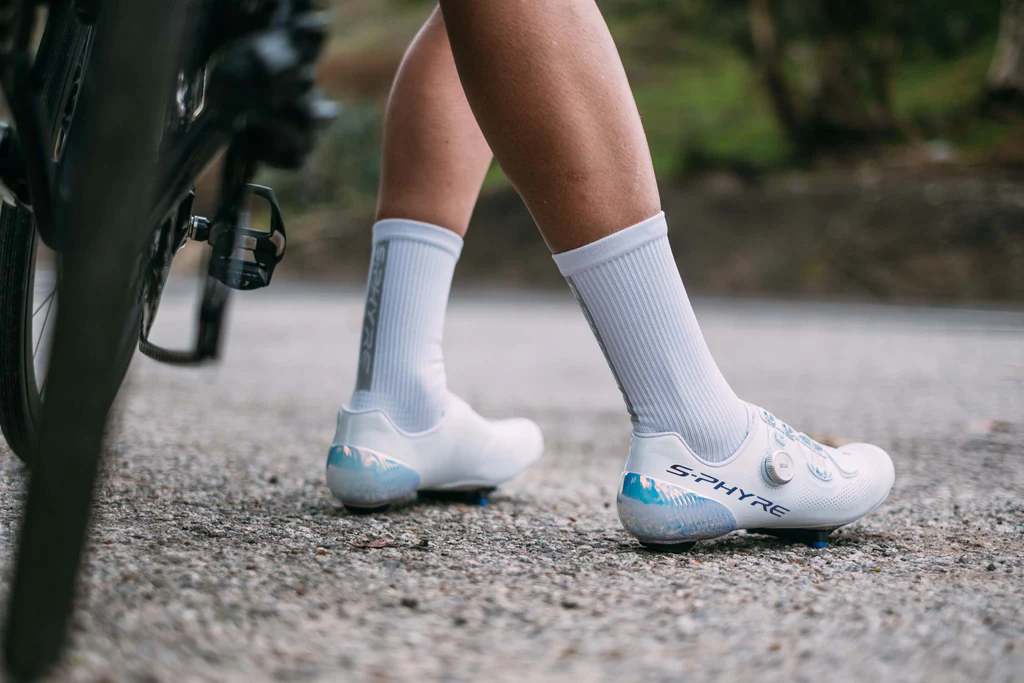
No discussion of white cycling shoes would be complete without highlighting a pair that has reached almost legendary status among enthusiasts: the Shimano S-Phyre in white. If you’re looking for a high-end example of why white shoes have so much cachet, the S-Phyre line is it.
Shimano S-Phyre RC9 Series – Pro Performance, Pro Aesthetics: The S-Phyre (pronounced “s-fire”) shoes are Shimano’s flagship road cycling shoes, worn by numerous WorldTour professionals. These shoes are all about top-tier performance: ultra-stiff carbon soles, feather-light materials, and a secure dual-BOA dial fit system. The latest model – the S-Phyre RC903 – was famously the shoe of choice for stars like Mathieu van der Poel and Lorena Wiebes even before it hit the market. Shimano offers the S-Phyres in multiple colors, but the glossy white version is arguably the most iconic. In the new RC903, Shimano introduced a fresh pearly white finish alongside other colorways. There’s even a women’s RC903W that comes in a white-with-silver trim design, emphasizing how popular white shoes are across the board.
Why cyclists love them: Besides the pro-level stiffness and fit, riders covet S-Phyre shoes for their style and quality. The white S-Phyres particularly stand out – they have a brilliant, clean look that screams professionalism. Reviews often mention that the white upper is easy to wipe clean due to a protective coating, helping them stay white longer. And since these are the shoes you see on pros in the Tour de France sprinting for the line, wearing them can make you feel like you’ve got a piece of that elite kit. They perfectly encapsulate the form meets function argument: you get a noticeable performance boost and that pro-white aesthetic in one package.
Price & Prestige: High-end shoes like the S-Phyre don’t come cheap – the RC903 retails around €360 / $450 for a pair. That investment gets you Shimano’s pinnacle technology (and a 12/12 stiffness index sole for maximum power transfer). When you spend that kind of money, part of the appeal is looking the part too. The white S-Phyres deliver on that front. They’re often featured in magazine lists of the best cycling shoes, and it’s no coincidence that Shimano’s marketing frequently shows them off in the white color. It’s a nod to the fact that serious riders buying top-tier gear often want it in white – for all the reasons we’ve discussed.
If you’re considering an upgrade to your footwear and want to embrace the white trend, the Shimano S-Phyre range is a benchmark. They combine the benefits of white cycling shoes (light reflection, sponsor-friendly looks) with craftsmanship that minimizes some downsides (the materials resist stretch and stains). Plus, clipping into a Sunday ride with a pair of white S-Phyres tells everyone you’re serious about your kit. It’s an aspirational product that indeed shows why white is such a sought-after color at the high end of cycling gear.
Pros wear them. Reviewers love them. If you’re considering white cycling shoes and want to go premium, this is the gold standard. Check them out on Shimano’s official site.
Conclusion: Should You Embrace the White?
Circling back to our title question – Why are more cyclists wearing white helmets and shoes, and should you? – the answer is clear. Cyclists are choosing white gear not just to follow a trend, but because it offers real benefits and an aesthetic uplift that resonates with the cycling lifestyle. White helmets and shoes can keep you a tad cooler, make you more visible, and unquestionably give you that elite, pulled-together look on the bike. It’s a unique blend of form and function that few other gear changes can provide.
Should you jump on board? If the idea of looking minimalist yet standout appeals to you – and you don’t mind the care required – then absolutely yes. There’s something aspirational about white cycling gear; it’s a small way to feel closer to the sport’s heritage and its modern icons. Every time you lace up white shoes or snap on a white helmet, you’re making a quiet style statement and joining a tradition that spans decades in cycling. It can be genuinely motivating and joyous to see that flash of white in your reflection as you ride by a shop window or in your post-ride photos.
Of course, it’s a personal choice. Some riders will always prefer the stealth look of black or the pop of a bright color, and that’s okay. But if you’ve been curious about the white gear phenomenon, now you know the key reasons behind it. The next time you kit up, consider giving white a try – even if it’s just swapping in some white socks or bar tape at first, or treating yourself to that pair of shoes you’ve been eyeing.
At the end of the day, the best gear is what makes you feel excited to ride. For many, a pair of white shoes and a matching white helmet do exactly that, elevating each ride with a dose of pro-level flair and confidence. If that sounds like something you’d enjoy, then go forth and rock the white! Just keep a bottle of cleaner handy, and you’ll be golden (or rather, brilliant white).
Happy riding – and welcome to the white side.
| Question | Quick Answer |
|---|---|
| Why are cyclists opting for white helmets & shoes? | For a mix of style and function – white gear offers a pro-level aesthetic, matches any kit, and even adds practical perks like visibility and cooling. |
| Benefits of white cycling shoes? | They reflect sunlight (keeping feet cooler) and enhance visibility on the road. White also provides a neutral canvas that pairs with any kit. |
| The white cycling gear aesthetic – what’s the appeal? | A clean, minimalist look that’s become a modern cycling hallmark. White helmets and shoes signal professionalism and attention to detail. |
| Downsides – are white shoes worth it? | Only if you’re up for the upkeep. White shows dirt easily, so you’ll need to clean gear regularly. But the style might make it worth it. |